
Pricing
What Does a Dumpster Actually Cost in Kissimmee?
Prices quoted online for Kissimmee dumpsters range from about $290 to well over $800 for what sounds like the same thing. Here is what actually explains the gap.
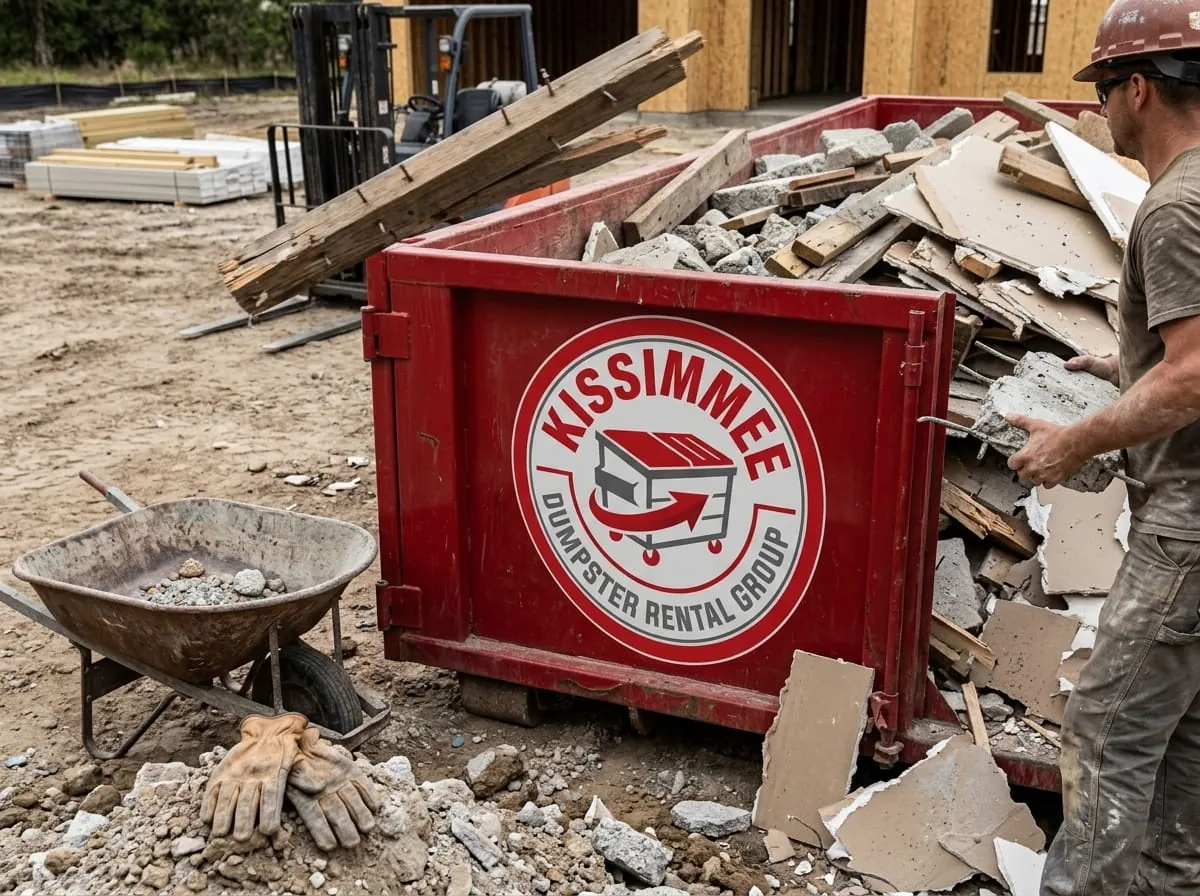
The honest answer up front
Most dumpster rentals in Kissimmee and the surrounding Osceola County communities land somewhere between roughly $340 and $650. A 10 yard for a bathroom gut sits near the bottom of that. A 30 yard on a construction site sits near the top. Heavy material pushes it higher; a short rental of a small can pushes it lower.
That is a wide range, and anyone who gives you a single number without asking what you are throwing away is guessing. But it should not be a mystery either, and by the end of this article you will be able to work out roughly where your job falls.
What a flat rate should include
When we say flat rate, we mean one number covering all five of the following:
- Delivery of the container to your address
- The rental period — the days you have it on site
- Collection when you are done
- Disposal of the load at a licensed facility
- An included weight allowance, stated in tons before you book
If a quote does not clearly cover all five, it is not a flat rate. The most common omission is the weight allowance, and it is not an accident — leaving it vague is how a $299 quote becomes a $540 invoice.
The five things that move the price
1. Container size
The obvious one, but the relationship is not linear. A 30 yard does not cost three times a 10 yard, because a large share of the cost is the truck movement rather than the steel box. Two truck trips cost two truck trips regardless of what is on the back.
2. What the material weighs
This is the big one and it is why we ask. Disposal facilities charge by the ton. A 20 yard full of mattresses and cabinetry might weigh a ton and a half. The same 20 yard full of roof tile could weigh six. The container cost is identical; the disposal cost is not remotely.
3. The material stream
Clean segregated material disposes more cheaply than mixed waste. Clean concrete goes to a recycler and becomes road base. Clean yard waste becomes mulch. Clean cardboard and metal have value. Mixed construction and demolition debris going to a Class I facility is the most expensive per ton. Separating streams is the single most effective way to reduce a large bill.
4. How long you keep it
The standard rental period is built into the flat rate. Extensions are charged at a modest daily rate, which is a real cost to us because that container is not earning anywhere else. It is usually a small number, but ask what it is.
5. Distance and access
A container going to Buenaventura Lakes eight minutes from our yard costs less to service than one going to Haines City thirty minutes out. We build that into the quoted number rather than adding a trip fee afterwards, but it is a genuine cost driver. Difficult access — a long unpaved drive, a gated community requiring coordination, a site that needs the driver to wait — also has a real cost.
Where the extra fees come from
Here is the honest list of things that legitimately add to a dumpster bill, and what they are for:
| Charge | What it is | How to avoid it |
|---|---|---|
| Weight overage | Per ton above the included allowance | Size for weight; separate heavy material |
| Extension days | Keeping the container past the agreed period | Book a realistic period from the start |
| Dry run | Driver arrives and cannot deliver or collect | Keep the space clear; move vehicles |
| Overfill | Loaded above the top rail; cannot be hauled legally | Stop at the fill line and call for a swap |
| Prohibited items | Separation and special handling of banned material | Ask before loading anything questionable |
| Relocation | Moving the container after placement | Decide the spot before delivery |
Every one of those is avoidable, and none of them should appear without you having been told the rate in advance.
Broker pricing vs local pricing
This matters more in Kissimmee than in most markets, because the tourist corridor makes this an attractive area for national lead-generation companies.
A broker does not own trucks or containers. They run a website that ranks for “dumpster rental Kissimmee”, take your booking and your card, and then sell the job to a local hauler for less than you paid. The difference is their margin.
Three consequences follow. First, you are paying a markup for no added service. Second, the person quoting you has no idea what your driveway looks like, which is why brokered jobs so often arrive with the wrong size or no protection boards. Third, when something goes wrong, the broker and the hauler each point at the other.
You can usually spot one. A broker will not have a local address. They will be reluctant to state a weight allowance. They will want your card before they will confirm anything. And if you ask which landfill the load is going to, they will not know.
How to compare two quotes properly
Put both quotes next to each other and check five things:
- Container size — are they actually the same? A 15 and a 20 are not.
- Included tonnage — the most common hidden difference.
- Overage rate per ton — if they will not tell you, that is your answer.
- Rental period in days — a cheaper quote for three days is not cheaper.
- Whether disposal is included — occasionally it is quoted separately.
Once you have normalised those five, the quotes are usually much closer than they first appeared, and the remaining gap is the broker margin.
Ways to genuinely reduce the cost
Not tricks — real things that work:
- Separate your streams. Clean concrete in its own small container. Clean metal set aside. On a demolition or a large renovation this is the biggest single saving available.
- Break material down. Furniture that is dismantled takes a fraction of the space. Sofas cut in half. Cabinets flat-packed. On a volume-limited load this can be the difference between one container and two.
- Load deliberately. Flat and heavy at the bottom, bulky on top, gaps filled. A badly loaded 20 yard holds noticeably less than a well loaded one.
- Let vegetation dry. Wet yard waste is heavy. A few dry days before loading genuinely reduces the tonnage.
- Take the small stuff to the county. Osceola County accepts yard waste, tyres, white goods and household chemicals from residents at the Bass Road site. If part of your job fits that, it is free.
- Book a realistic period. Extensions cost more per day than the equivalent days would have cost in the original booking.
- Do not overfill. An overfilled container cannot be hauled, which means a return trip you pay for.
Questions worth asking any hauler
Whether you call us or somebody else, these five questions will tell you almost everything:
- What weight is included, and what is the rate per ton over that?
- How many days is the rental period, and what does an extra day cost?
- Do you own the truck, or are you subcontracting this?
- Do your drivers put boards down on driveways?
- Where does the load go, and can I have the weight ticket?
Any local hauler worth using will answer all five without hesitating. If someone stumbles on the first or the third, you have learned something useful.
Need a container in Kissimmee?
Call and describe the job. Three minutes on the phone gets you a size recommendation, a flat rate and a delivery window — and we will tell you if a smaller, cheaper container is the right answer.
Call (689) 215-8855