Rules
What Can and Cannot Go in a Dumpster: The Kissimmee List
The accepted list is long and boring. The prohibited list is short, strictly enforced, and the reason loads occasionally get rejected at the gate. Here is both, plus where to take the things we cannot take.
The short version
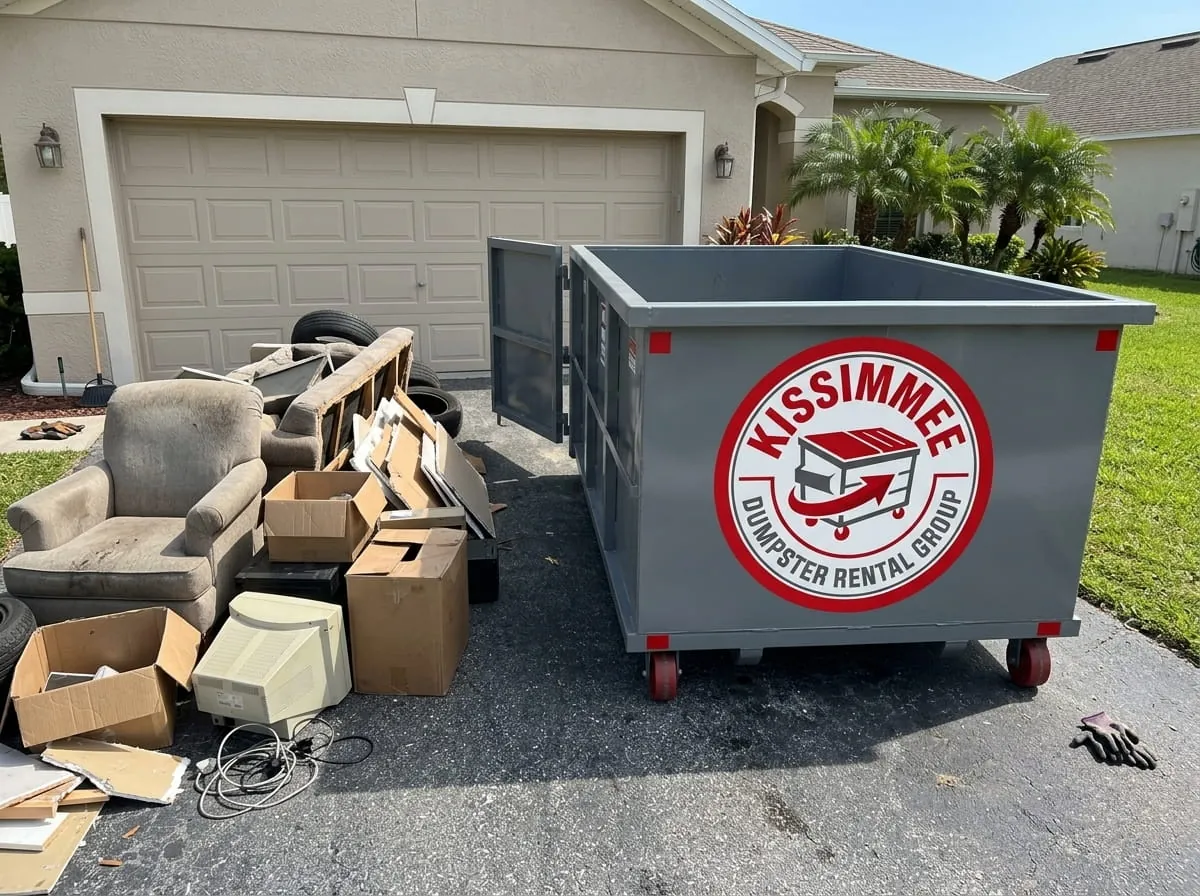
If it came out of a building, a yard or a household and it is solid, non-hazardous and not on fire, it can almost certainly go in the container. If it is liquid, toxic, pressurised, or contains asbestos or refrigerant, it cannot.
That covers about ninety-five percent of questions. The rest of this article is the other five percent, which is where the money and the headaches live.
What you can put in
Household and furniture
Sofas, armchairs, beds, mattresses and box springs, tables, wardrobes, bookcases, desks, carpets, rugs, curtains, clothing, linens, toys, books, paperwork, kitchenware, garden furniture, grills, exercise equipment and general clutter. There is no mattress surcharge on our containers, which is worth knowing because some haulers do charge one.
Construction and renovation debris
Drywall, plaster, timber, plywood and sheet goods, doors, windows, trim and skirting, kitchen cabinets, countertops, tiling, laminate, hardwood and vinyl flooring, insulation, siding, soffit and fascia, screen enclosure frames, guttering, and general non-hazardous building material.
Roofing
Asphalt shingle in both three-tab and architectural, concrete and clay barrel tile, felt and synthetic underlayment, metal panels, flashing, drip edge, ridge vents, boots and roof decking. Weight is the constraint here, not acceptability — see the roofing sizing guide.
Yard and vegetation
Branches, limbs, palm fronds and trunks, hedge and shrub cuttings, grass, leaves, sod and turf, and storm-fallen material. Keep it clean and it disposes through a cheaper stream.
Heavy and inert material
Concrete, block, brick, pavers, stone, rubble, ceramic and porcelain tile, terrazzo, screed and clean asphalt. All fine, all heavy — these belong in a 10 yard.
Appliances and metal
Washing machines, dryers, ovens, dishwashers, water heaters, microwaves, scrap metal, ductwork, conduit, fencing and bicycles. Refrigerators, freezers and air conditioning units are acceptable only once the refrigerant has been professionally evacuated and the unit tagged.
What is absolutely prohibited
These are not company preferences. Receiving facilities will reject them, Florida DEP regulations prohibit them, and in most cases there are meaningful fines attached.
- Liquids of any kind — including paint, stains, varnish, thinners, solvents, oils, fuels and hydraulic fluid
- Asbestos-containing material — common in pre-1980 floor tile, mastic, pipe lagging, textured ceilings and some siding. Requires a licensed abatement contractor
- Tyres — regulated separately in Florida
- Batteries — vehicle, marine, lithium and household
- Propane, gas and pressurised cylinders — including “empty” ones, which retain flammable residue
- Refrigerant-charged equipment — fridges, freezers, AC units and dehumidifiers not professionally evacuated
- Pesticides, herbicides, fertiliser and pool chemicals
- Medical, clinical and infectious waste, including sharps
- Radioactive material of any kind
- Hot ashes or anything smouldering
- Contaminated soil
- Fluorescent tubes and older ballasts which may contain PCBs
The grey areas people ask about
Dried-out paint cans
Fully hardened latex paint in an open can is generally acceptable. Liquid paint of any type is not, and oil-based paint is not acceptable even hardened. The clean answer is that Osceola County takes household paint at the Bass Road site free of charge for residents.
Televisions and computers
A few household items in a mixed load are generally fine. Volumes of e-waste should go to a dedicated recycler — there is genuine value in the material and it is the right thing to do regardless.
Pressure-treated timber
Acceptable in a mixed load. At real volume, tell us at booking because some facilities handle it differently.
Mattresses
Perfectly acceptable, no surcharge from us. Some jurisdictions elsewhere in the country ban them; Florida does not.
Bagged material
Fine, and it helps with loose debris. But do not bag anything you would not put in loose, and bear in mind an inspector at the facility may open bags.
Food waste
Small quantities from a kitchen clearout are acceptable. Meaningful volumes of organic food waste are not — in a Florida summer, a container sitting for a week becomes a genuine public health problem.
Where to take what we cannot accept in Osceola County
| Material | Where it goes |
|---|---|
| Paint, solvents, pool and garden chemicals | Osceola County household chemical collection, Bass Road site |
| Tyres | Bass Road site accepts tyres from residents (per-ton fee) |
| White goods and fridges | Bass Road site accepts white goods from residents |
| Vehicle batteries | Most auto parts retailers take them back free |
| Electronics | County e-waste collection events and dedicated recyclers |
| Medications | Pharmacy take-back programmes |
| Asbestos | Licensed abatement contractor only |
| Propane cylinders | Exchange programmes at hardware and grocery retailers |
The Osceola County site on South Bass Road is open weekdays and is residential-only. It will not take construction and demolition debris, household trash, or furniture — which is exactly why most jobs need a container for the bulk and a county trip for the awkward bits.
What happens if prohibited material turns up
Loads are inspected at the receiving facility. If prohibited material is identified, one of three things happens: the item is pulled and specially handled at cost, the load is rejected and returned, or the facility levies a fine which is passed on.
None of those are good outcomes and all of them cost more than a phone call would have. If you are looking at something and wondering, that wondering is the signal to ask. We would genuinely rather spend thirty seconds on the phone than deal with it at the gate.
Loading rules that are not about material
Two rules apply regardless of what you are throwing away.
Do not load above the top rail. Florida law prohibits hauling an overfilled container. If we arrive to one loaded above the fill line, we cannot take it until material comes off, and a return trip may be chargeable. The rail is not a suggestion.
Distribute the weight. Heavy material spread across the floor of the container rather than piled at one end. A load concentrated at the rear makes the container difficult and occasionally unsafe to winch onto the truck.
A pre-load checklist
- Walk the pile and pull out anything liquid, pressurised or chemical
- Check for a refrigerant tag on any appliance with a compressor
- If the building predates 1980 and you are disturbing floor tile, mastic or textured ceiling, stop and get it tested
- Set aside scrap metal if there is enough to be worth it
- Check pockets, drawers, tins and books before furniture goes in
- Keep clean concrete or clean vegetation separate if you have a container for it
- Load flat and heavy first, bulky on top, and stop at the rail
Work through that and the load will go through the gate without a second glance. If anything on your pile has you hesitating, call us before it goes in.
Need a container in Kissimmee?
Call and describe the job. Three minutes on the phone gets you a size recommendation, a flat rate and a delivery window — and we will tell you if a smaller, cheaper container is the right answer.
Call (689) 215-8855